The Pie That Has to Earn Its Place: Shepherd’s Pie and the Pub Kitchen
There are some dishes a pub can hide behind a good pint. Shepherd’s pie is not one of them. It arrives at the table with nowhere to go: no crisp batter to distract from tired filling, no stack of garnishes to build a case for the kitchen. It is lamb, gravy and mash in a dish, and it either tastes like someone cared or it tastes like the freezer section has been consulted.
That sounds stern. It is meant affectionately. Shepherd’s pie is one of the great British pub plates, and it deserves better than the shrug it sometimes gets — a ladle of grey mince, a cap of mash with the texture of wall filler, a passing relationship with the grill. On a cold November evening, with the windows misted and the fire doing its work, it should be a plate that makes the whole room feel settled. But that only happens when the kitchen treats it as a dish in its own right, not as a way of using up the week.
The lamb has to lead
Let us start with the name. Shepherd’s pie means lamb, full stop. Cottage pie is beef. If a menu uses the terms interchangeably, that is not a charming local quirk; it is a small breach of trust. Lamb brings sweetness, a little richness and a savoury depth that beef does not quite match in this context. It needs slow cooking, not a brisk browning and a packet of stock.
A proper filling begins with lamb mince that has been given time with onions, carrots, perhaps celery, a spoonful of tomato purée and enough liquid to make a gravy rather than a crumble. It should taste of more than salt. Rosemary and thyme are welcome, but they should sit behind the meat, not shout over it. A splash of Worcestershire sauce or a little ale can add roundness. What matters is that the gravy has body — a glossy, lip-sticking richness that holds its line on the plate rather than flooding the mash from below.
This is where many pub versions go wrong. They are either dry and claggy or thin and watery, as if the gravy is trying to leave the building. Neither is acceptable. The filling should be loose enough to be spoonable but thick enough that when you cut into the pie, it does not collapse into a puddle. That is not fussiness. It is the difference between a dish and a disappointment.
Mash with a bit of backbone
The topping is not a blanket. It is the crust, the comfort and the counterpoint all at once. Floury potatoes are the sensible starting point — Maris Piper, King Edward, something with a bit of give. They need to be dried properly after draining, then mashed with butter and enough milk or cream to make them smooth without turning them into soup. A egg yolk or two can help them brown and add richness, though this is a matter of house style rather than doctrine.
What matters most is that the mash has enough backbone to sit on top of the filling and brown under the grill. If it is too wet, it will slump and scorch in patches. If it is too stiff, it will taste like a lid. The aim is a generous, uneven layer — fork-marked, perhaps, so the ridges catch and crisp. A little grated cheese on top is not compulsory, but a mature Cheddar or a dusting of Parmesan can be a fine thing if the kitchen knows when to stop.
The grill is not a garnish. It is the final stage of cooking. The pie should go under a proper heat long enough for the top to turn golden and crisp at the edges, with a few darker peaks that taste of toasted potato and butter. A pale, barely warmed lid is one of the saddest sights a pub table can offer. It suggests the dish was assembled with the clock in mind rather than the plate.
A November plate, not a nursery tea
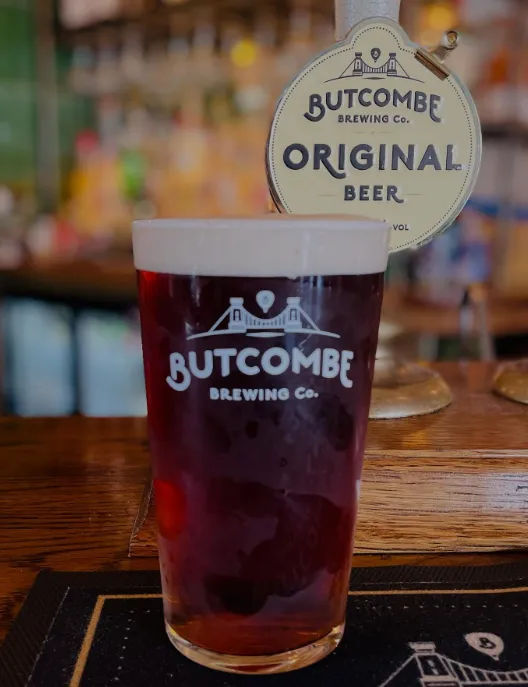
Shepherd’s pie suits this time of year because it is unshowy and deeply satisfying. It does not need a wine list beside it. A pint of cask ale — something malty and not too aggressive — is a fine companion, and a glass of robust red will do the job too. What it does need is a bit of green on the side, or perhaps buttered peas, or a sharp pickled onion to cut through the richness. A pile of chips alongside is not necessary; the mash is already doing that work.
There is a temptation in pub kitchens to treat shepherd’s pie as a soft option for people who do not want to make a decision. That is the wrong way round. It is a dish that reveals the kitchen’s habits. It shows whether the gravy is made with care, whether the lamb is treated as an ingredient rather than a commodity, whether the mash is seasoned properly and whether anyone has checked the seasoning before it leaves the pass. You cannot bluff it with a nice bit of crockery.
At a countryside inn, there is also a matter of pride. This is not a metropolitan novelty or a trend to be interpreted. It is a plate that belongs to the pub, the village and the colder months. It should arrive at the table with a bit of confidence, perhaps in its own dish, with a spoon and a napkin and no apology about the fact that it is simple food. Simple is not the same as plain. Simple is the point.
How it should be served
A proper pub shepherd’s pie should be made in a sensible quantity and served from the dish, not pressed into a neat cylinder and balanced on a smear. It should be hot all the way through, with a filling that steams when the spoon goes in and a top that gives a little resistance before it yields. The gravy should cling to the lamb rather than run away from it. The mash should taste of potato and butter, not just of heat.
And it should be served without a lecture or a garnish of micro herbs. A little chopped parsley is fine. A sprig of rosemary is unnecessary if the filling already knows what it is doing. What it needs is a warm room, a decent pint and the sense that the kitchen has taken the dish seriously. That is what a pub owes shepherd’s pie. Not reinvention. Not irony. Just the proper thing, done properly, and brought to the table with pride.