Older, Wiser, Better: The Autumn Case for Hogget

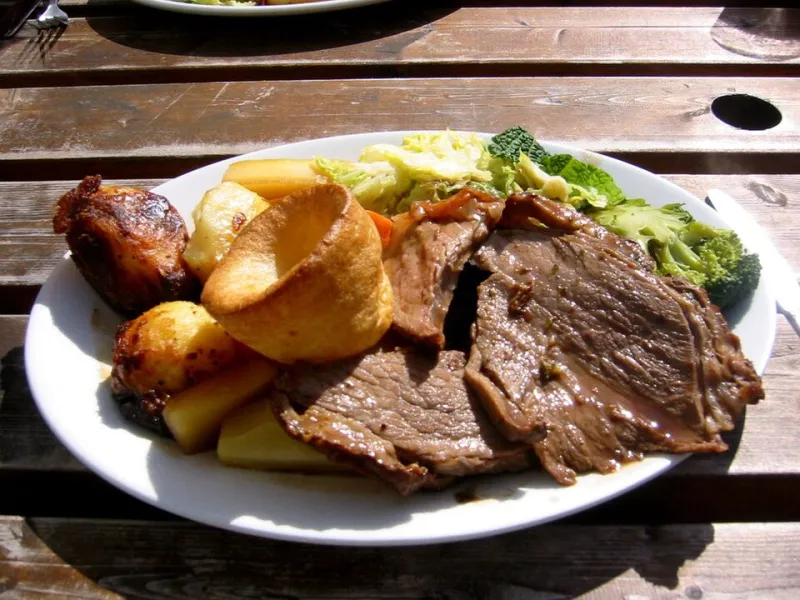
Photo: slow roasted hogget shoulder with root vegetables on a pub plate, via i.pinimg.com
At the Woolpack, the autumn menu has a habit of arriving with the leaves. The salads get a little sturdier, the pies come back, and the kitchen starts thinking about slow heat and long tables. This is the moment when hogget ought to walk quietly past lamb and take its place near the centre of the plate.
Hogget is not a trendy invention. It is a sensible, traditional use of the flock: a sheep older than lamb but younger than mutton, usually somewhere between a year and two years old. It has had time to grow, to graze, to put on a bit of condition. In the right hands, that extra time translates into deeper flavour, a firmer texture and a richness that spring lamb simply cannot offer.
What hogget actually is
A lamb is under a year old. Mutton is generally an older sheep, often two years or more. Hogget sits in the useful middle ground. It is old enough to have developed character, but young enough to remain tender when cooked with a bit of thought. The term may not be on every supermarket label, but it is familiar to farmers, butchers and anyone who has spent time in sheep country.
That middle ground matters. A hogget carries more fat cover and more depth than a young lamb. The meat tastes of the pasture it came from, not just of the sauce it is served in. It rewards roasting, braising and mincing in equal measure, which makes it an unusually practical proposition for a pub kitchen.
Age, breed and grazing
Flavour is not only a question of months. Breed and grazing shape the meat as much as age does. A hill-bred sheep that has spent its life on rough pasture will taste different from a lowland animal raised on richer grass. Native breeds bring their own qualities: some are lean and gamey, some are fuller and sweeter. The kitchen has to taste, ask questions and adjust.
At the Woolpack, we are in sheep country. That is not a marketing line; it is the landscape outside the windows. The fields around us have shaped the local flock, the local butcher and the local idea of what good meat should taste like. A pub kitchen in this part of the world should be comfortable with older cuts. It should know the difference between a shoulder that needs four hours and a loin that needs hardly any time at all.
Good provenance is not about a romantic story on a chalkboard. It is about asking practical questions. Was the animal grass-fed? How old was it? Which breed? How long was it hung? A butcher who can answer those questions is worth keeping close. A menu that reflects the answers is worth reading.
From slow-roasted shoulder to shepherd's pie
The easiest way into hogget is the shoulder. Bone it, roll it, season it generously and give it a long, low spell in the oven with cider, rosemary and a bed of root vegetables. The meat should pull apart under a spoon but still hold its shape on the plate. Serve it with buttered greens, a spoonful of damson or quince if you have it, and a pint of bitter alongside.
From there, the menu almost writes itself. Neck fillet can be braised until it collapses into a dark, sticky stew. Breast can be rolled and roasted until crisp. Loin can be cut into thick chops and grilled hard over heat. Mince makes a shepherd's pie with real savoury depth, especially if the potato top is more crisp than cloud. A suet pudding filled with slow-cooked hogget and black pepper is about as close to a fireside plate as a kitchen can get.
None of this is difficult food. It is patient food. The pub kitchen is well suited to patience: a stockpot on the back ring, a tray of shoulders in the oven, a pie dish waiting for its pastry lid. Hogget fits the rhythm of a country pub far better than a piece of meat that demands last-minute attention.
The value question
There is a common assumption that older cuts are cheap. They can be better value, but they are not automatically inexpensive. The real value lies in what they give back. A shoulder feeds a table generously. The bones make stock. The leftovers make a pie or a plate of rissoles. The flavour is strong enough that a modest portion feels satisfying.
In 2026, with everyone watching the cost of a night out, that matters. A pub lunch or supper built around hogget can feel generous without being extravagant. It can be a proper plate of food, rooted in the local landscape, at a price that respects the customer and the farmer alike.
A sheep-country kitchen
The Woolpack has always been a place for hearty plates and a warm welcome, and hogget sits comfortably in that tradition. It is not a curiosity or a chef's indulgence. It is the sort of meat that belongs on a country pub menu in autumn and winter: deep-flavoured, versatile and honest.
So when the leaves turn and the evenings draw in, look beyond spring lamb. Ask for hogget. Cook it slowly. Serve it with something sharp, something green and a pint of something local. The older sheep has earned its place at the table.