Pull, Settle, Sip: A Friendly Guide to Cask Ale at the Bar
Photo: Colin Craig, CC BY-SA 2.0, via Wikimedia Commons
There is a lovely bit of theatre to a British handpump. The pump clip sits there like a small shop sign, the handle waits at attention, and the beer inside has had time to settle, breathe and find its feet. Ordering a cask ale should feel like part of the welcome, not a test you can fail. At the Woolpack, the bar is meant to be a place where you can point, ask, taste and decide — ideally with a warm fire somewhere behind you and something hearty on its way from the kitchen.
The clip is a signpost, not a syllabus
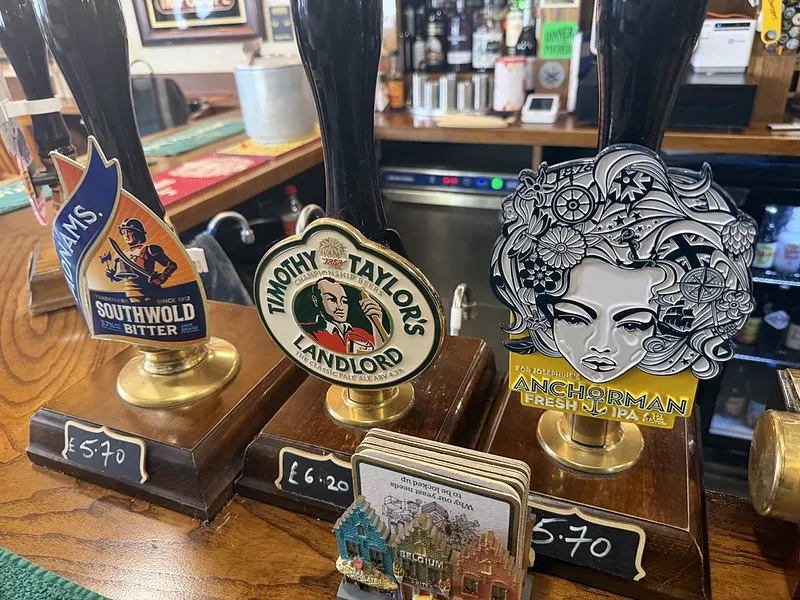
A pump clip is simply the label for the cask on that handpump. It usually gives you the brewery, the beer name, the ABV and a short description. That is useful, but it is not the whole story. Two beers can both say ‘golden and refreshing’ and still taste quite different. One might be crisp and grassy; another might be softer, rounder, with a whisper of citrus. The clip points you in the right direction. Your own taste does the rest.
Brewery names are worth noticing. A local brewery you have enjoyed before is a decent starting point, especially if you like the way they handle malt or hops. But it is not a guarantee. Brewers make seasonals, one-offs and experimental casks. A pump clip from a favourite brewery is an invitation, not a contract.
ABV, style and the question of strength
The ABV figure tells you how strong the beer is, and it is the most practical number on the clip. A session beer around 3.6% to 4.2% is designed for an unhurried pint and a long conversation. A 4.5% to 5% beer has a bit more weight. Above that, you are often in stronger ale territory — think richer malt, dried fruit, maybe a warmer finish. None of these is better than the others. They simply suit different moods and different lengths of afternoon.
Style descriptions are helpful if you treat them as clues rather than rules. ‘Bitter’ does not necessarily mean aggressively bitter. ‘Mild’ does not mean flavourless. ‘Pale’ can be lively and hoppy; ‘best bitter’ often has more malt balance. If the clip mentions chocolate, coffee or dark fruit, you can expect a darker, richer pint. If it mentions citrus, hedgerow or tropical fruit, you are probably in hoppier territory. The fun is in finding out.
What the sparkler is doing
You may see a small nozzle on the end of the handpump spout. That is the sparkler. It helps create a tighter, creamier head by adding a bit of resistance as the beer is pulled through. Some drinkers love that soft, mousse-like top; others prefer the beer served without one. There is no single correct answer, and regional habits are not laws. If you have a preference, say so. If you are not sure, let the bar team serve it the way they usually do and see what you think. A good pub will not treat the question as an inconvenience.
Tasters, halves and how to ask
Asking for a taster is one of the most sensible things you can do at a bar. You do not need to dress it up. ‘Would I be able to try a small taste of the porter before I decide?’ is a perfectly good sentence. It is not a novice move. It is exactly what a taster is for. If you are choosing between two beers, ask for a taste of each. If you are curious about a guest ale, say so.
A half pint is also your friend. It lets you try something stronger or stranger without committing to a full evening with it. You can mix and match across the session, or start with a half and move on to a pint of something you know you love. The point is not to prove anything. The point is to enjoy the beer in front of you.
A little patience goes a long way
Cask ale is a living product. It needs time to settle after the cask is tapped, and it needs turnover to stay at its best. If a beer has just gone on, the bar team may want to let it settle a little longer before serving it. If a pump is coming off soon, they may steer you towards something fresher. That is not fussiness. It is care.
At the Woolpack, we would rather pour you a beer that is ready than rush one that is not. Cask ale is not meant to be icy-cold and gassy. It is meant to be cool, settled and full of flavour — a pint that tastes like it belongs in a country pub, not a laboratory.
So next time you stand at the bar, read the clip, ask the question and take the taster. The handpump is not a puzzle. It is an invitation.