Before the Evening Rush: The Family Tea That Earns Its Place by the Fire
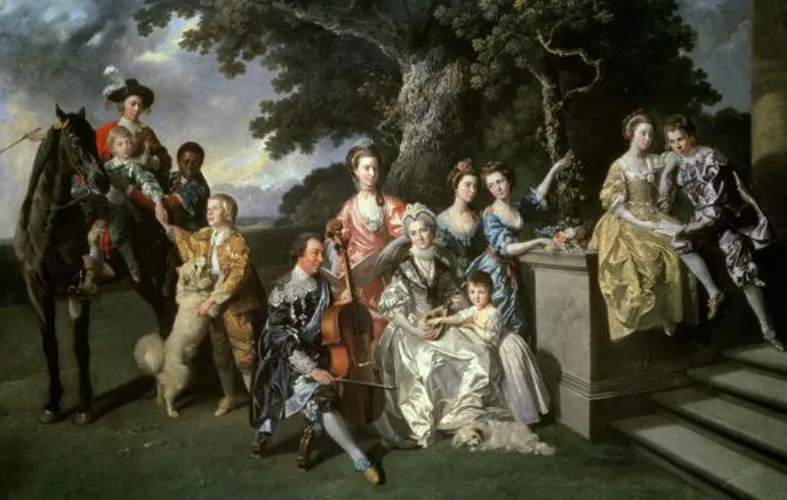
Photo: Johan Zoffany, Public domain, via Wikimedia Commons
There is a particular kind of pub evening that begins at ten to six. A pram is folded by the door, a grandparent is settling into the corner seat, and a small person is already asking whether the fire is real. The bar is quiet. The kitchen is not yet under siege. And for an hour or so, the village inn belongs to families in a way that feels less like a concession and more like the whole point of the place.
Family tea has had a rough reputation. Too often it means a laminated menu, a table near the toilets and the sense that everyone is waiting for the children to finish so the grown-ups can have the room back. That is not hospitality; it is crowd control. At the Woolpack, we would rather see the early sitting as a proper pub occasion in its own right — one that can welcome a young family without turning the rest of the evening into a creche.
The early sitting is not a compromise
The case for family tea starts with timing. Book a table before the evening rush and you are not fighting for space, noise or attention. The kitchen has time. The front-of-house team has time. A child who is hungry at half past five does not have to be talked down from a meltdown while the bar fills up around them. A grandparent who prefers to be home before dark can still be part of the meal.
It also protects the later evening. A village pub has to hold several rooms in its head at once: the drinkers at the bar, the couples in the snug, the walkers who have come in for a late plate, the regulars who will drift in after eight. If families are welcomed properly at six, they are not squeezed into the same hour as everyone else. The pub keeps its grown-up character because it has given the early part of the evening a clear shape of its own.
That shape matters. It says: come in, sit down, eat well, and be gone before the fire is at its fullest. Nobody has to be told to hurry. The rhythm does the work.
Same kitchen, smaller plates
The most important thing a pub can do for families is resist the urge to invent a separate children's menu of beige shapes. A child does not need a different culinary universe. They need the same good food, scaled sensibly and served without fuss.
At the Woolpack, that might mean a smaller plate of the day's roast, with the gravy on the side for the cautious. A little pie with mash and a spoonful of peas. Fish from the same fryer, chips from the same basket, a dish of vegetables that is not an afterthought. If a small person wants only a bowl of soup and bread, that is a proper tea too. If they want to try a bit of what their grandmother is having, all the better.
Portions should be honest rather than miniature. A child of six and a child of eleven are not the same appetite, and a pub kitchen that can be flexible is worth more than one that insists on a fixed box. Sharing plates work well here: a bowl of chips for the table, a dish of pickles, a pudding with two spoons. The aim is not to fill them up on novelty but to let them eat the food the pub is actually proud of.
A welcome that starts at the door
Family hospitality is often discussed as if it were a piece of equipment — a high chair, a changing mat, a box of crayons. Those things help. But the welcome starts earlier than that. It starts with a table that has enough room around it for a pram or a pushchair, and a member of staff who does not sigh at the sight of one.
It means booking in the knowledge that the pub will not seat you in a draught or at the edge of a busy thoroughfare. It means a grandparent being able to sit in a proper chair, not perched on a stool. It means asking, when the table is booked, whether the family needs anything particular — not as a special favour, but as ordinary preparation.
There is a balance to strike. A pub that becomes entirely child-led stops being a pub. The grown-up character of the room matters: the hum of conversation, the smell of the fire, the unhurried pleasure of a pint. But that character is not threatened by a family eating early. It is threatened by a room that has no sense of occasion at all.
The quiet theatre of the fireside high chair
There is something quietly theatrical about a high chair placed near the fire. Not too near, of course — safety first, and a decent distance from the grate. But close enough that the small occupant can watch the flames and the room at the same time. It becomes a little stage. The child is part of the evening, not parked in a corner.
That position also does something for the adults. A parent can eat with both hands for a few minutes. A grandmother can tell a story without raising her voice. The rest of the room gets the pleasant sight of a family doing ordinary family things in a proper pub. It is not a performance. It is just the sort of low-level theatre that a good inn does well.
Practical notes from the Woolpack pass
A few things make family tea work in practice. Book ahead, especially at weekends, and ask for the early sitting rather than assuming it will be quiet. Bring what you need for the very young, but do not feel you have to bring the whole nursery. Order a mixture of small plates and full plates, and ask the kitchen what can be scaled down. If a child has an allergy, say so when you book and again when you order; a good pub would rather ask twice than guess.
And leave before the rush. Not because anyone is being marched out, but because the early tea has its own natural end: pudding eaten, coats on, fire still glowing. The evening can then shift into its next gear without anyone feeling displaced.
That is the real argument for family tea. It is not about making the pub more childish. It is about making it more useful, more generous and more alive at the hour when a village inn should be at its warmest. A high chair by the fire is not a compromise. Done properly, it is a sign that the place knows exactly who it is for.