Windfall Weekend: Why the Cider Press Still Belongs in the Pub Yard
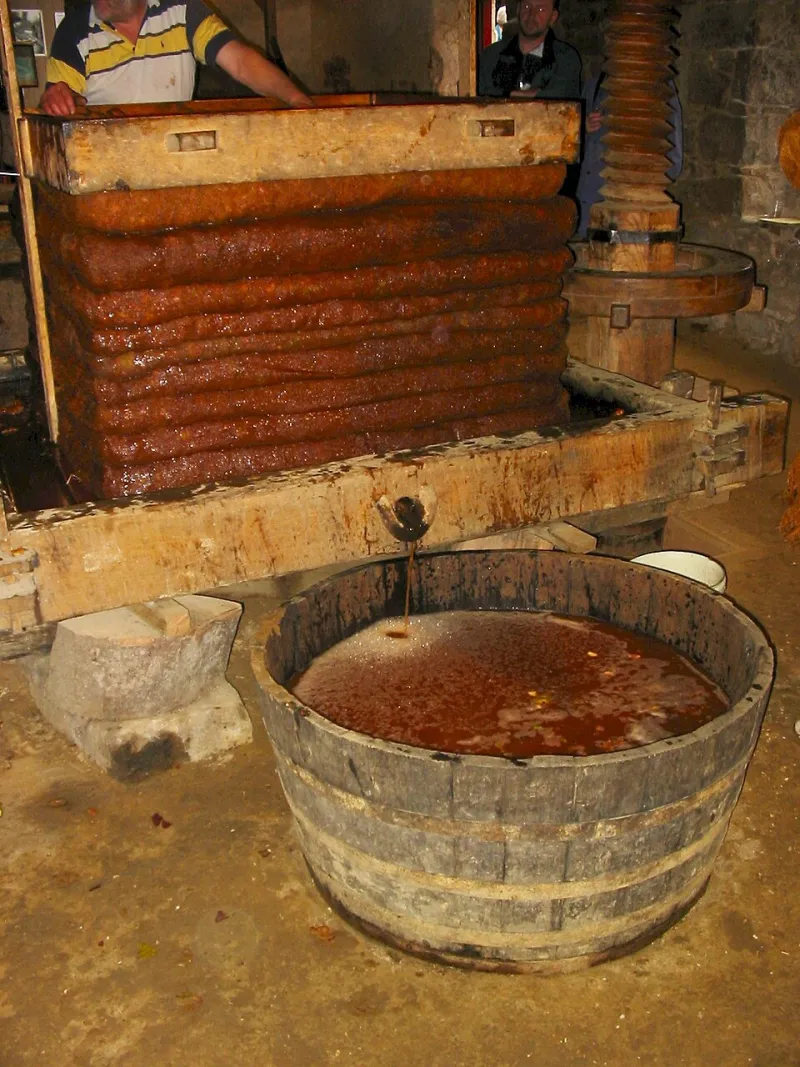
Photo: Man vyi, CC SA 1.0, via Wikimedia Commons
The yard at the Woolpack is usually a place of quiet comings and goings: a dog waiting by the gate, a boot scraper doing its job, a few crates stacked by the cellar door. In November, it becomes something else entirely. There are apples in boxes, a wooden press on trestles, a bucket of clean water and a growing pile of pomace that the wasps find before anyone else does. Someone has brought a flask. Someone else has brought a radio. The first batch always takes longer than it should, because everyone has an opinion on how fine the apples ought to be chopped.
This is not a festival. It is not a photo opportunity. It is a job of work with a pint at the end of it, and that is precisely why it belongs at a village inn.
The Orchard’s Last Stop Before the Cellar
By the middle of November, the local orchards have given up most of what they are going to give. The pickers have been through, the good keeping apples are laid out in trays, and what remains are the windfalls and the awkward customers: the small, the scuffed, the slightly misshapen fruit that would never win a prize at the village show. They are exactly the apples a press wants. Sharp, sweet, bitter and bland all go in together, because cider is not a beauty contest. It is a conversation between varieties.
We ask people to bring what they have. A carrier bag from a garden tree is as welcome as a crate from a proper orchard. Bramleys bring the acid; Cox’s Orange Pippins bring the perfume; the unnamed tree at the end of someone’s plot often brings the mystery. The only firm rule is that the fruit should be sound enough to press and not so rotten that it turns the whole batch. A few bruises are fine. A wasp’s graveyard is not.
The press itself is a simple thing: a scratter to break the apples down, a cloth, a slatted crate, a screw or a hydraulic jack. It is slow work. You learn quickly that a little patience with the layering gives a better yield than brute force. You also learn that everyone has a grandmother who made cider, or a neighbour who used to, or a story about a barrel that went off in a shed in 1978. The yard fills with that sort of talk. It is not nostalgia for its own sake. It is the practical memory of a place that once knew what to do with a glut.
Fresh Juice, Last Year’s Cider and a Line of Hand Pumps
The pressing gives us juice. The cellar gives us cider. That distinction matters. What comes out of the press on a Saturday afternoon is cloudy, sweet and alive, best drunk within a day or two and quite happy with a slice of cake. What goes into a barrel and sits quietly until next autumn is something else: drier, sharper, more serious. At the bar, the two sit in different rooms of the same conversation. The fresh juice is a harvest treat. The finished cider is a drink with a bit of grip to it, and it earns its place beside the hand pumps.
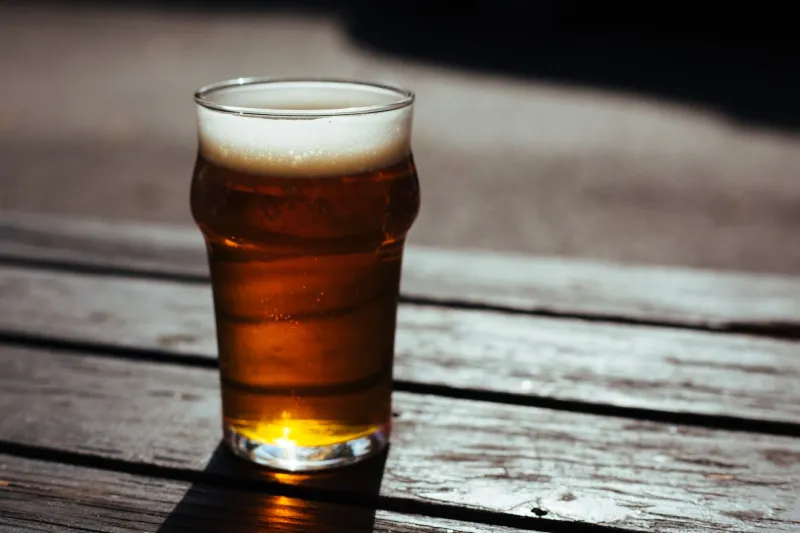
Cask ale and cider are not rivals. They are neighbours. A good bitter is malt and hop and gentle carbonation; a good cider is fruit and acid and a clean, dry finish. Putting them side by side on the bar gives people a choice that makes sense with pub food. The sharpness of cider cuts through the fat of a pork pie, the richness of a mature cheddar, the crisp edge of a cheese straw. It lifts a plate of ham and pickles. It is very good with the sort of sausages that have a bit of herb and pepper in them, and it is better still with a wedge of apple and a spoonful of mustard. You do not need to build a menu around it. You just need to let it do its job.
We are not suggesting that every pint of cider needs a lecture. Far from it. The point is simpler: when the cider is local and the apples are known, the drink stops being a generic product and becomes a part of the season. It tastes of the orchard it came from, even if the orchard is a back garden three streets away.
Shared Labour and the Heart of the Harvest
There is a reason we do this in the yard rather than in a sterile room out the back. The pub is already the place where the village tells itself what is going on. A cider press just gives everyone something to do while they do it. Children turn the handle. Someone’s uncle supervises the cheesecloth. A neighbour who has not been in for months appears with a box of apples and stays for a plate of something warm. The work is shared, the mess is shared, and the first glass is shared. That is not a marketing idea. It is how a harvest used to be brought in, and how it can still be marked without pretending we are living in a history book.
By late afternoon the light goes early, the yard smells of apples and woodsmoke, and the press is rinsed down for another year. The juice is divided up. The pomace goes to someone with chickens. The pub fills up. There is a pint of bitter on one table and a glass of sharp cider on the next, and nobody feels the need to choose a side. That, to us, is the last of the apples done properly: not a relic, not a performance, just a good afternoon’s work with a warm room at the end of it.