Three Halves and a Plate: The Quiet Genius of the Tasting Flight
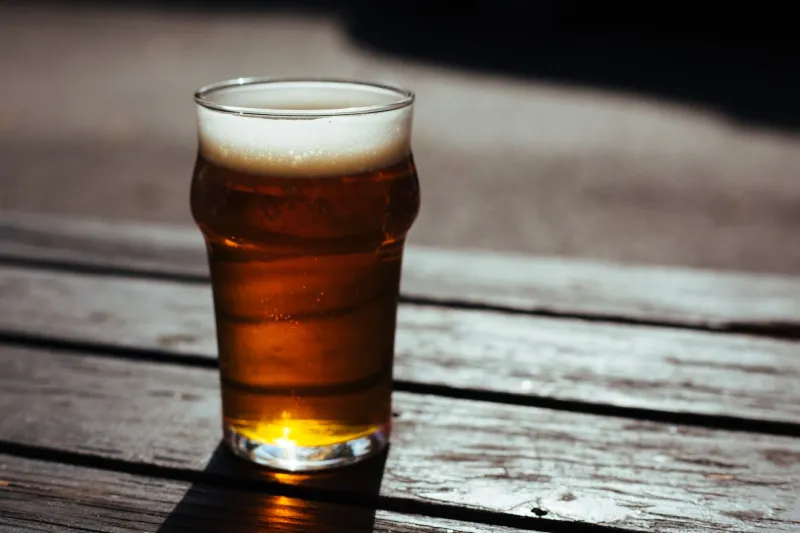
There is a small ritual at the bar that we would happily never see again: the apology. Someone leans in, glances at the hand pumps, and says, almost sheepishly, "Just a half, please." As though a smaller glass needs a reason. As though it were a retreat from the serious business of drinking rather than a perfectly good way to spend an evening.
It isn't. A half is a decision, not an absence of one. And when you put three of them together, in the right order, next to a plate or two, you get something the pub has been quietly good at for centuries without ever making a fuss about it: a tasting flight.
The half is not a hedge
A pint is a commitment. It is twenty minutes of your evening, a temperature that will drift, a head that will fall. There is nothing wrong with that — a well-kept pint in front of a fire is one of the better arguments for living in this country. But it is a single answer to a question that might have had several.
The half asks the question back. It lets you find out what the ordinary bitter is doing this week before you settle in with it. It lets you try the mild you've been eyeing since October. It lets you put a stout next to a pudding without committing to a whole evening of stout. In a bar with four or five casks on, that is not indecision. That is homework, and the good kind.
We have never understood the idea that a flight is a city-bar affectation, all tiny glasses and a printed card. It is just the thing a curious drinker has always done — "what's that one like, then?" — given a bit of shape and a bit of sequence.
How a flight actually works
A few practicalities, because a flight poured badly is just three warm halves going flat in front of you.
Order matters. We pour from lightest to darkest, or gentlest to boldest, so that the palate isn't knocked sideways by a stout before it has met a golden ale. Ask at the bar and we will talk you through the sequence; it takes less time than finding a menu.
Don't have all three at once. Cask ale is a living thing, and a half sitting in the glass is already beginning its slow decline. We would rather pour two, let you get halfway down the second, and then pull the third. It arrives with its condition intact, which is the whole point of drinking it here rather than anywhere else.
Keep them cool but don't chill them to death. Cellar temperature, not fridge temperature. And please don't stir them together to see what happens. Somebody always does.
A Woolpack flight, built around the food
Here is the version we would put in front of you tomorrow, and the reasoning behind it.
The ordinary bitter with the rarebit. A good bitter in the low fours has enough hop to cut through melted cheese and enough malt to meet the mustard. Rarebit is a strong, salty, assertive thing, and a delicate beer would simply vanish beneath it. The bitter doesn't fight the rarebit. It clears the decks between mouthfuls.
The dark mild with the pie. Mild is the most underrated beer on the bar and the most useful at the table. Its roast is soft, its hops are low, and it lets a proper gravy speak. Put a hopping, citrus-forward beer next to a shortcrust pie and the pastry disappears under the noise. Put a mild next to it and the whole plate relaxes.
The stout with the pudding. Sticky toffee, a chocolate tart, something with a bit of burnt sugar in it. The roast bitterness of a stout against the sweetness is one of the oldest and most reliable pairings in the building. A half is exactly the right size for it, too — a pint of stout after a pudding is a lovely idea that most people regret about two-thirds of the way down.
If you want a fourth, we won't stop you. A golden ale with the fish is a fine way to start.
The myths, poured out
The first myth is that halves are for people who can't handle a pint. In our experience they are for people who want to know what they are drinking, which is a different and better thing.
The second is that flights are a gimmick. They are not, as long as the beer is kept properly and the order is thought through. A gimmick is a flight served on a novelty paddle with a branded glass and no advice. A flight poured by someone who knows the casks is just good service.
The third is that drinking less means enjoying less. Three halves is a pint and a half, spread across an evening, with food in the middle of it and a walk home at the end. It is a slower, lower, more sociable way to drink than a round of pints, and it leaves you in a fit state to taste the last one properly.
The fourth myth is value. We will be honest: a half is slightly worse value per millilitre than a pint, because the glass, the wash and the pour cost the same either way. You are paying a little extra for variety and for information. Most people decide that is a fair trade by the second glass.
No lectures, just a well-poured half
We are not going to pretend a flight is a public health campaign. It is a good night out. But it is also, quietly, the most moderate way to drink well that we know of: the pace is set by the plate, the conversation outlasts the beer, and nobody has to finish anything out of politeness.
So the next time you find yourself apologising for a half, don't. Ask for three of them instead, in the right order, and let us bring them over one at a time. Take your time with the bitter before the pie arrives. Let the mild sit while you finish the gravy. Save the stout for the pudding, and then sit a while in front of the fire while the evening does what evenings do.
That is the case for the half, and it isn't a complicated one. It is simply that a pub with several casks on has several things to tell you, and the smaller glass is the better listener.